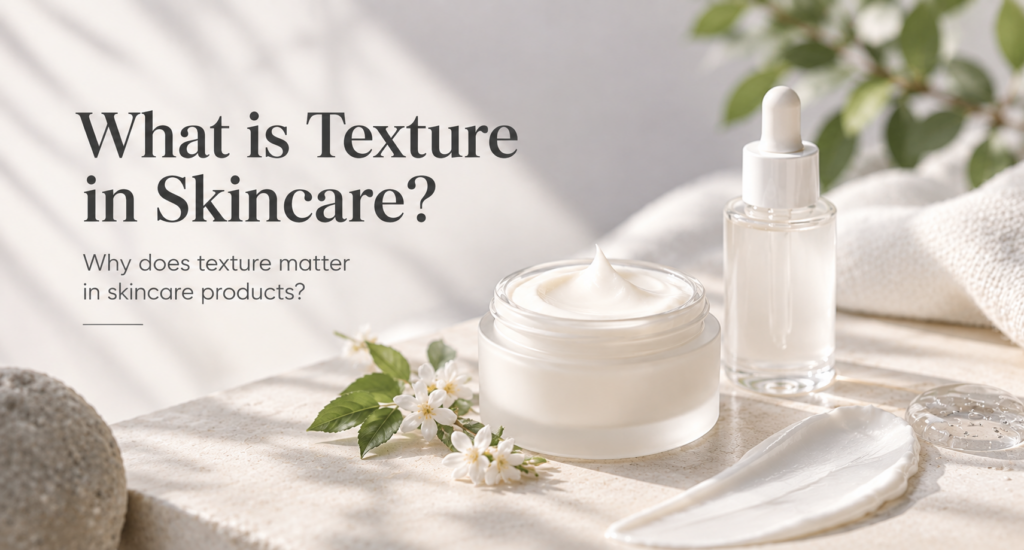
When developing a skincare product, we often focus on active ingredients, efficacy, and product claims.
But there is another factor that can have a major impact on the product experience: texture.
The same moisturizing formula can feel very different depending on the season and environment.
In summer, high temperatures and humidity can make a rich, heavy texture feel uncomfortable. In winter, when the air is dry, that same texture may feel more comfortable and moisturizing.
So, does a product need to be changed for every season?
Not necessarily.
One Formula, Different Seasons?
Creating an all-season skincare product does not simply mean choosing a texture that sits somewhere between light and rich.
A well-designed formula needs to balance several factors, including:
- How easily the product spreads
- How it feels during application
- How quickly it absorbs or settles into the skin
- The level of hydration after application
- Tackiness or heaviness
- How well it layers with other products
- How the amount used affects the overall feel
Texture is also more than simply deciding whether a product should be watery, creamy, or thick.
The choice of base system, emollients, humectants, thickening agents, gelling agents, and film-forming ingredients can all influence the final texture and sensory experience.
In other words, texture is the result of the formula as a whole.
Can the Same Product Feel Different Depending on the Season?
The texture of the product itself does not change, but the way we perceive it can.
Temperature, humidity, and the condition of the skin can all affect how a product feels during and after application.
That is why developing an all-season product requires more than evaluating texture in a laboratory.
It is also important to consider the real-life conditions in which the product will be used:
- What kind of climate will it be used in?
- When will it be applied?
- What products will be layered underneath or on top?
- What does the target user expect from the product?
These factors can all influence the overall user experience.
Summer and Winter: Two Different Conditions to Consider
Summer and winter provide useful examples of how flexible a texture needs to be.
In summer, a product needs to feel light and comfortable while still providing enough moisture.
In winter, the skin may need a richer, smoother feeling and better moisture retention.
However, the answer is not simply to make the formula lighter for summer and heavier for winter.
The real challenge is finding the right balance so that the product remains comfortable and functional as the surrounding conditions change.
An All-Season Formula Is Not Simply a “Middle-Ground” Texture
An all-season formula is not about creating a texture that is neither too light nor too rich.
Instead, it is about designing the entire formulation so that the product can provide an appropriate sensory experience across different conditions.
This is where formulation know-how becomes important.
A good texture is not something added at the end of development. It needs to be considered from the beginning, together with the product concept, ingredients, target users, and intended use.
Texture Is Not Just a “Finishing Touch”
Even with carefully selected active ingredients and well-designed efficacy, a product can be difficult to use if the texture feels too sticky, too heavy, or difficult to layer.
On the other hand, a well-balanced texture can make a product feel comfortable and easy to incorporate into a daily routine.
In that sense, texture connects formulation with user experience.
A product is not defined only by what ingredients it contains.
It is also defined by how it feels when people actually use it.
If You Are Developing Your Own Skincare Brand
This is where texture becomes especially interesting from a product-development perspective.
Instead of starting with only:
“I want to create a moisturizing serum.”
It can be useful to consider questions such as:
- Who is the product for?
- What kind of environment will it be used in?
- What does the skin need?
- Should the texture feel light and fresh, or rich and moisturizing?
- Is it intended for morning or evening use?
- What kind of feeling should remain on the skin after application?
These questions help shape a product that is not only well-formulated, but also fits the positioning and concept of the brand.
Product differentiation is not always about adding more ingredients.
Sometimes, it comes from how the formula is designed to create the right experience for the people who will use it.
One Formula. Different Seasons. One Well-Balanced Experience.
At IZAVELL, we support OEM product development from 1,000 pieces, from product concept and formulation to texture development, packaging selection, and manufacturing.
If you have an idea for your own beauty brand but are not sure where to start, feel free to talk with us.
IZAVELL OEM
From your idea to your beauty brand.